- Get Nerdy With AI
- Posts
- New Skill Index Shows Where AI Hits Hardest 📊
New Skill Index Shows Where AI Hits Hardest 📊
Which Skills Stay Safe as AI Adoption Grows

Samantha Vale
November 26, 2025
In partnership with

The New Framework for Enterprise Voice AI

Enterprise teams are automating more calls than ever — but without a consistent framework, deployments become unpredictable, costly, and slow to scale.
The BELL Framework introduces a structured way to design, test, launch, and improve Voice AI agents with reliability.
Get the guide enterprises are now using to de-risk voice automation and accelerate deployment.

Hey there,
AI is reshaping labor, powering a historic data center buildout, and even accelerating galaxy-scale simulations. Together, they show a world where skills matter more than job titles, electricity becomes the new competitive bottleneck, and scientific breakthroughs arrive faster than anyone expected.
📰 Upcoming in this issue
🤖 57% of Work Hours are Automatable. The Power Move is Skills, Not Layoffs
⚡ $320B Into Servers, Power Use Could Hit 12%. Who Blinks First
🌌 100B-Star Milky Way, Simulated in 115 Days, Not 36 Years
📈 Trending news
Indiana Emerges as Midwest AI Infrastructure Anchor
What an AI-First Megabank Means for Your Wallet
Is This the Start of a U.S. AI Manufacturing Boom
🤖 57% of Work Hours are Automatable. The Power Move is Skills, Not Layoffs

McKinsey says today’s tools could technically take over 57% of US work hours. That does not equal job losses. It means roles shift and skills matter more. The big prize, about $2.9T a year by 2030, goes to teams that redesign workflows so people, agents, and robots work in sync.
Key Takeaways:
🧭 Workflow Wins: Redesign full processes, not single tasks, to unlock about $2.9T in yearly value by 2030.
📊 Skills Overlap: Over 70% of skills stay relevant, but shift to framing questions, interpreting results, and coaching tools.
🧩 New Index Signal: The Skill Change Index flags digital and information-processing roles as most exposed, assisting and caring roles least.
🚀 Tool Fluency Spikes: Job posts asking for tool fluency jumped nearly 7x in two years, already touching 8 million US workers.
⚡ $320B Into Servers, Power Use Could Hit 12%. Who Blinks First?
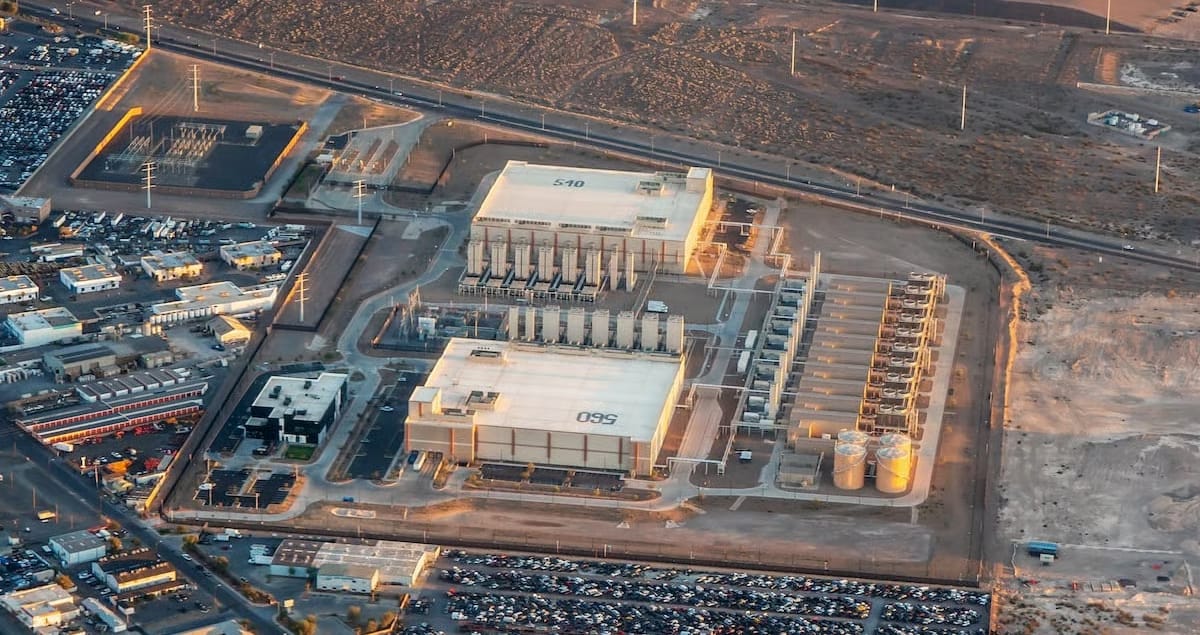
Big Tech is racing to build vast U.S. data centers, with up to $320B going in this year and projects spanning Ohio to Arizona. The buildout could push data centers toward 12% of U.S. electricity use, tripling today’s share. The lever is scale plus incentives, but energy and water limits set the next moves.
Key Takeaways:
💸 $320B This Year: Amazon, Google, Microsoft, and Meta plan up to $320B in 2025, up from $230B in 2024, to expand U.S. data centers.
🔌 Power Hits 12%: Data centers could reach 12% of U.S. electricity soon, triple today’s share, raising bills and stressing local water systems.
🧊 Cooling Crunch: A single ChatGPT query can use up to 10x a web search’s electricity, driving liquid cooling and on-site water treatment.
🏗️ Mega Campuses Land: Examples include Amazon Ohio at $23B, Google Kansas City at $10B, Tract Buckeye up to $20B, Microsoft Wisconsin at $7B+, plus Stargate’s multigigawatt plan.
🌌 100B-Star Milky Way, Simulated in 115 Days, Not 36 Years

A RIKEN-led team built the first star-by-star Milky Way simulation, tracking 100 billion bodies and running 100 times faster than past models. They used a deep learning surrogate for supernova physics, cutting 1 billion years of evolution to 115 days, a shift that could also shrink climate and weather simulations.
Key Takeaways:
⏱️ Speed Gain: Simulating 1 million years took 2.78 hours, turning a 36-year job into roughly 115 days on modern hardware.
🧪 Surrogate Physics: A deep learning model learned supernova gas expansion over 100,000 years, then plugged into a standard hydro plus N-body code.
🛰️ Scale Jump: Tracks over 100 billion stars, about 100 times more particles than top models that lump stars into clusters.
🖥️ Checked on Supercomputers: Results matched runs on Fugaku and Miyabi, hinting this shortcut can aid weather and climate models too.
📊 Take This Edition’s Poll:
Why It Matters
These shifts reveal where opportunity is moving. Workers who build tool fluency rise. Regions that anchor AI infrastructure win jobs and investment. And industries from finance to climate science will run on simulations once thought impossible.
Until our next issue,

Samantha Vale
Editor-in-Chief
Get Nerdy With AI
P.S. Interested in reaching our audience? You can sponsor our newsletter here.