- Get Nerdy With AI
- Posts
- Meta’s Llama 4 Breaks the AI Mold 🦙
Meta’s Llama 4 Breaks the AI Mold 🦙
Run Llama 4 Without the Heavy Hardware

Samantha Vale
April 14, 2025

Hey there, Tech Trailblazers! 🤖✨
This week, Meta just did something huge—again. With the release of Llama 4, they’re not just building smarter models... they’re making them open and free for anyone to use. Whether you’re a developer, an AI explorer, or just AI-curious, you now have access to cutting-edge tools once reserved for research labs.
The best part? You don’t need a supercomputer to try them out. I’ve rounded up the top ways to test Llama 4 (even the mighty Maverick) right now—no downloads, no fees.
Let’s take this llama for a spin.
📰 Upcoming in this issue
Meta’s Llama 4 Models Are Open, Powerful—and Changing the AI Game 🧠
NVIDIA’s Super Bowl of AI Delivers a $1 Trillion Vision 🤖
Try Llama 4 Without the Price Tag 🦙
📈 Trending news
Meta’s Llama 4 Models Are Open, Powerful—and Changing the AI Game 🧠 read the full 2,689-word article here
Article published: April 7, 2025
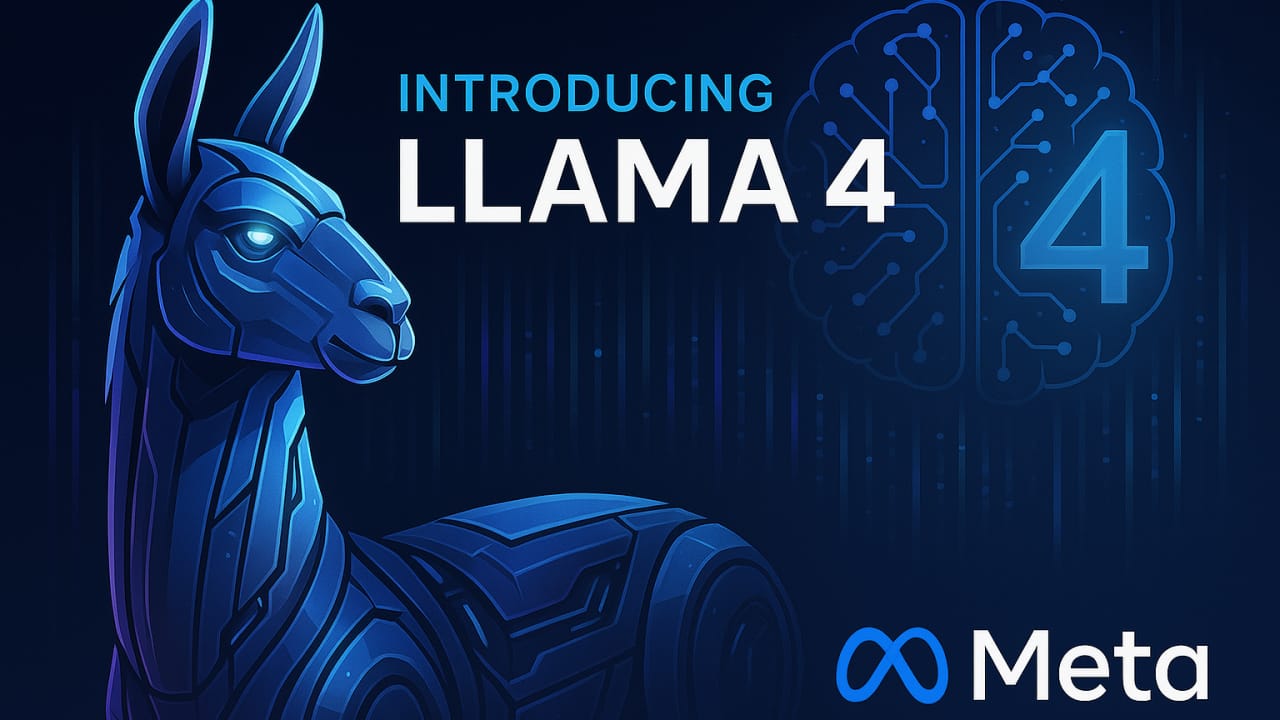
I just finished reading Llama 4 Models: Meta AI is Open Sourcing the Best on Analytics Vidhya, and let’s just say—Meta didn’t just raise the bar, they handed it to the public.
With the release of Scout, Maverick, and the internal-only Behemoth, Meta is pushing openness and performance. Scout is nimble and ideal for long-memory tasks on modest hardware, while Maverick is an enterprise-grade AI that beats GPT-4o on reasoning, coding, and image comprehension. And Behemoth? It’s the secret sauce behind the scenes—too powerful for public use, but key in training the others.
These models support 10 million token context lengths, are natively multimodal, and come with open weights—a major shift in a world still gated by closed AI.
Key Takeaways:
🐑 Scout is ultra-efficient: With 17B active parameters and Int4 quantization, it handles 10M-token contexts on a single H100 GPU.
🧠 Maverick beats GPT-4o: With 1417 Elo on LMSYS Arena, it excels in reasoning, coding, and visual tasks—using only 17B active params from 400B.
🚀 Behemoth powers them all: At ~2T total params and 288B active, it’s not public—but it trains Scout and Maverick through co-distillation.
🌍 Meta goes all in on open AI: While others gatekeep, Meta offers full access via Hugging Face, Meta apps, and llama.meta.com.
NVIDIA’s Super Bowl of AI Delivers a $1 Trillion Vision 🤖 read the full 1,033-word article here
Article published: April 8, 2025
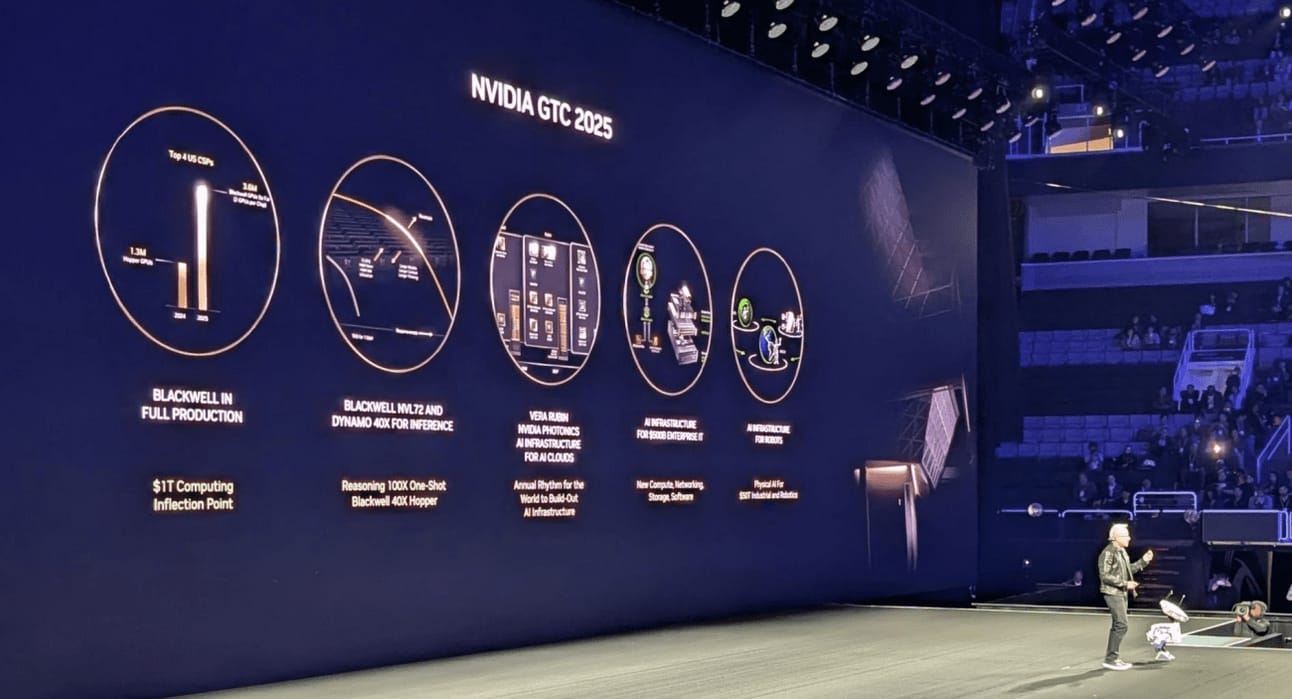
I just read NVIDIA GTC 2025: What Happened at the Super Bowl of AI by KD Nuggets, and let me tell you—Jensen Huang didn’t just fire off a t-shirt cannon, he fired up the future.
From announcing the Blackwell Ultra GPU to teasing the 2026 Rubin AI chip, NVIDIA is hurtling toward a projected $1 trillion data center business. And then there’s NVIDIA Dynamo—a bold shift from IT to AI agents as the new OS for the AI era.
Add a GM partnership on autonomous vehicles, a robotics revolution poised to offset the global labor shortage, and the powerhouse DGX Station redefining AI computing... and GTC 2025 felt more like a moon landing than a conference.
Key Takeaways:
🚀 Blackwell Ultra drops in 2025, Rubin AI chip in 2026, Rubin Ultra in 2027—ushering in a next-gen GPU era.
🧠 NVIDIA Dynamo replaces VMware. The OS now sits atop AI factories, not traditional data centers.
🚗 NVIDIA x GM team up. They're building self-driving cars using NVIDIA’s AI across design, build, and experience.
🤖 Robots as paid workers. By 2030, we’ll pay robots $50K/year—matching humans—to fill a 50M-worker global gap.
Try Llama 4 Without the Price Tag 🦙 read the full 770-word article here
Article published: April 7, 2025
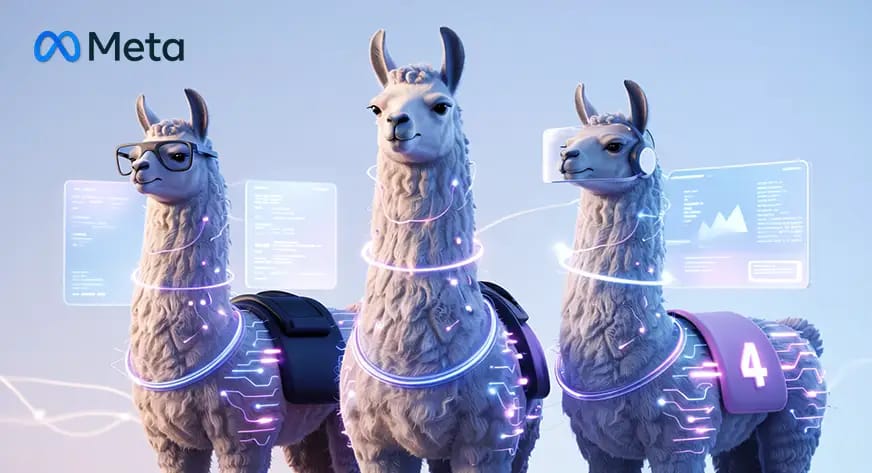
I just read 3 Ways to Access Llama 4 for Free on KD Nuggets, and it’s like Meta just handed us the keys to the AI kingdom.
With Llama 4 Scout and Maverick now open-sourced, these state-of-the-art models are breaking benchmarks—but running them locally is nearly impossible without 80GB of VRAM. That’s where the magic of three free platforms comes in.
Meta.ai lets you chat with Llama 4 right in your browser—no downloads, no headaches. OpenRouter gives developers flexible API access with a smooth UI. And Groq? It’s all about blazing speed, offering lightning-fast inference in their playground.
So, if you’ve been itching to try the latest open-weight LLMs but don’t have a supercomputer under your desk, this guide is your golden ticket.
Key Takeaways:
💻 Meta.ai offers free browser access to Llama 4’s full multimodal magic—text and images included.
🌐 OpenRouter supports Llama 4 Maverick via a single API key—developers can switch models effortlessly.
⚡ GroqCloud delivers super-fast inference, giving users access to Llama 4 without VRAM limitations.
🚫 You can’t run it locally unless you’ve got 80+ GB of VRAM—even quantized versions are massive.
Why It Matters
Big Tech rarely gives away its best tools. But with Llama 4, Meta is rewriting the rules—and inviting the rest of us to play.
Open access means more builders, faster innovation, and fewer gatekeepers in the AI space. Whether you're writing smarter code, training better bots, or just geeking out on what's possible, this is your moment to experiment freely.
Because the future of AI isn’t just about power—it’s about who gets to use it. And now, the answer might just be: everyone.

Samantha Vale
Editor-in-Chief
Get Nerdy With AI