- Get Nerdy With AI
- Posts
- Is AI the Secret Weapon Against Modern Financial Fraud?
Is AI the Secret Weapon Against Modern Financial Fraud?
Turns out, the smartest way to fight fraud might not be human at all💡

Samantha Vale
August 04, 2025
In partnership with



Join 400,000+ executives and professionals who trust The AI Report for daily, practical AI updates.
Built for business—not engineers—this newsletter delivers expert prompts, real-world use cases, and decision-ready insights.
No hype. No jargon. Just results.
Hey there, Tech Trailblazers! 🤖✨
In this issue, we'll talk about how AI agents are reshaping financial fraud prevention—shifting from reactive systems to proactive, autonomous defense strategies.
AI agents now monitor transactions in real time, spotting suspicious patterns and anomalies faster and more accurately than legacy rule-based systems. These intelligent systems continuously learn and adapt, substantially reducing false positives while thwarting evolving threats—from identity theft to deepfake scams
📰 Upcoming in this issue
🛡️ How AI Agents Are Reinventing Fraud Prevention in Finance
🧪 Google Begins Testing Ads in AI-Powered Search Experiences
⚡ How Vibe Coding Is Creating a New AI Economy
📈 Trending news
Your Website Might Be Invisible in AI Search—Here’s How to Be Seen
If You Can Explain It, AI Can Do It—Even the Hard Stuff
From Decline to Demand: Why Some Jobs Thrive in the AI Era
🛡️ How AI Agents Are Reinventing Fraud Prevention in Finance

AI agents powered by autonomous decision‑making and behavioral analytics are elevating fraud detection—continuously monitoring transactions, spotting anomalies in real time, and adapting as intelligence evolves.
Key Takeaways:
🤖 Autonomous Monitoring: AI agents independently detect threats instantly, minimizing manual intervention.
📊 Behavior-Based Detection: Systems analyze user behavior and transaction contexts, uncovering sophisticated fraud patterns.
🕒 Adaptive Learning Over Time: AI models continuously evolve through feedback, improving detection accuracy and reducing false positives.
💼 Strategic Impact for Financial Firms: Institutions experience faster threat response, reduced risk, improved compliance, and measurable cost savings.
🧪 Google Begins Testing Ads in AI-Powered Search Experiences

As Google rolls out its new conversational AI Mode, it is introducing ads into AI-generated search answers—transforming how brands connect in search by integrating relevant ads within AI responses while expanding placements from mobile to desktop.
Key Takeaways:
🧭 Ads in AI Mode Coming Soon: Google is now pitching advertisers to place Search and Shopping ads inside its AI Mode experience, using learnings from AI Overviews to inform best practices.
💡 Contextual Ad Integration: Ads appear relevantly—either below or within AI-generated responses—designed to align with user intent and query context.
📈 Expanded Access Across Devices: Initially limited to U.S. users, ad placements will now extend to desktop environments and are slated for rollout in international English-speaking markets.
⚠️ Advertiser & User Adaptation: While ads may drive visibility early in the discovery process, concerns linger over lower click-through rates and potential intrusiveness in conversational UI.
⚡ How Vibe Coding Is Creating a New AI Economy
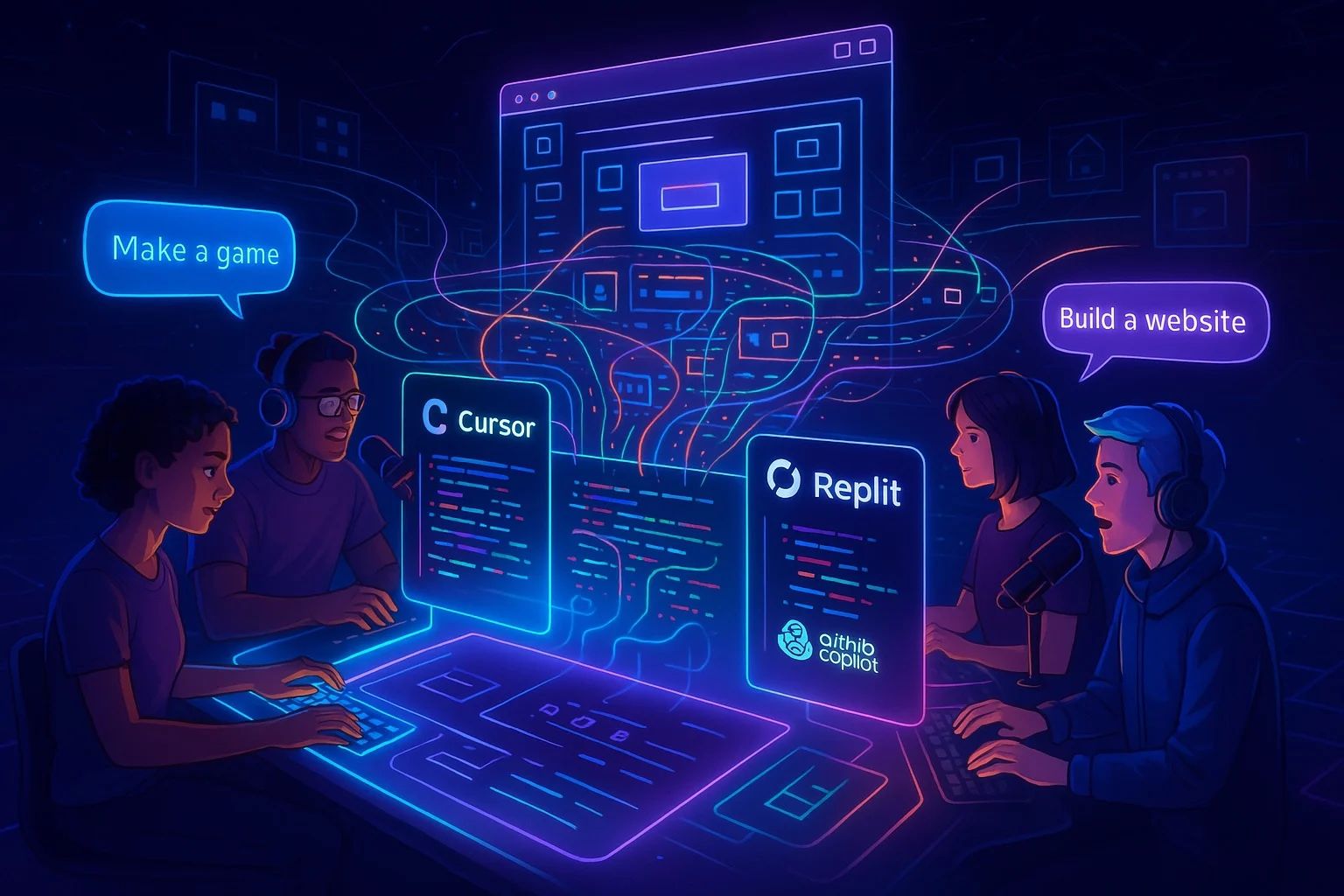
Vibe coding—a conversational, prompt-driven way to build software—has rapidly shifted from niche to mainstream, enabling tools like Lovable to democratize app development, launch startups in minutes, and generate massive AI-first economic activity.
Key Takeaways:
🚀 Democratizing Development: Anyone—designer, entrepreneur, or non-coder—can now build functional apps by describing their idea in plain English, dramatically lowering the barrier to innovation.
📈 Hyper-Growth via AI Tools: Companies like Lovable, built entirely through vibe coding, reached over $100M in annualized revenue in under a year, validating the model’s scale potential.
🤖 Evolving Developer Roles: As AI writes the code, human "product engineers" guide prompts, validate behavior, and manage quality—shifting focus from coding to orchestration .
⚠️ Risks Need Real Oversight: The rapid pace invites concerns about security, maintainability, and accountability—leading experts call for new code-review protocols and testing rigor .
Why It Matters
As financial fraud grows more sophisticated, so do the tools designed to fight it. AI agents aren’t just enhancing fraud prevention—they’re transforming it, offering a smarter, faster, and more adaptive line of defense.
With every transaction they analyze and every threat they neutralize, we move one step closer to a financial ecosystem that’s not just secure—but intelligently resilient.

Samantha Vale
Editor-in-Chief
Get Nerdy With AI