- Get Nerdy With AI
- Posts
- AI Lifts Microplastic ID to 98 Accuracy 🧪
AI Lifts Microplastic ID to 98 Accuracy 🧪
Attention Module Finds the Plastics in Noise

Samantha Vale
November 10, 2025
In partnership with

Find your customers on Roku this Black Friday

As with any digital ad campaign, the important thing is to reach streaming audiences who will convert. To that end, Roku’s self-service Ads Manager stands ready with powerful segmentation and targeting options. After all, you know your customers, and we know our streaming audience.
Worried it’s too late to spin up new Black Friday creative? With Roku Ads Manager, you can easily import and augment existing creative assets from your social channels. We also have AI-assisted upscaling, so every ad is primed for CTV.
Once you’ve done this, then you can easily set up A/B tests to flight different creative variants and Black Friday offers. If you’re a Shopify brand, you can even run shoppable ads directly on-screen so viewers can purchase with just a click of their Roku remote.
Bonus: we’re gifting you $5K in ad credits when you spend your first $5K on Roku Ads Manager. Just sign up and use code GET5K. Terms apply.
Hey there,
Ever think about how hard it actually is to track all the tiny plastics floating in our water?
This new AI method can distinguish similar plastics with greater accuracy using less labeled data, enabling faster checks across oceans, rivers, and treatment plants.
Stick around to see how more intelligent classification could finally give us a clearer picture of what is really in our water.
📰 Upcoming in this issue
🧪 AI Method Supercharges Microplastic Classification
🌾 Syngenta Unveils AI-Powered Cropwise Platform
🎓 New Tool Helps Schools Vet AI Edtech
📈 Trending news
Photos to Videos, Grok Imagine Adds Motion
iOS 27 Packs Three Fresh AI Tricks
Hospitals Get a Clear AI Playbook
🧪 AI Method Supercharges Microplastic Classification
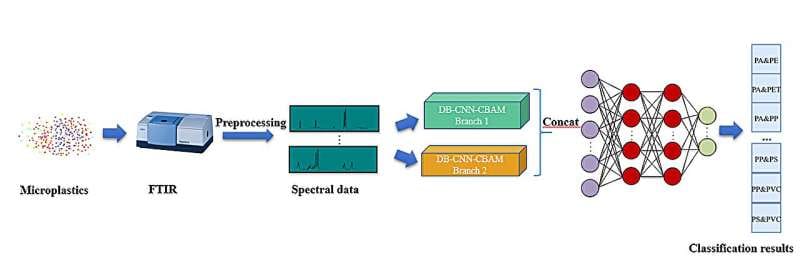
Researchers unveil a model that distinguishes polymer types with higher accuracy using fewer labels. The approach speeds up monitoring across oceans, rivers, and wastewater systems.
Key Takeaways:
🔍 Higher Accuracy: Improved models use advanced learning to boost classification precision on spectral data, separating similar plastics that often confuse older tools.
🧠 Less Labeled Data: Efficient training with semi-supervised techniques cuts annotation needs, enabling robust models from smaller, noisier datasets.
🧪 Lab-to-Field Fit: Portable workflows adapt to FTIR and Raman setups, enabling rapid screening in labs and near–real-time field surveys.
🌊 Impact at Scale: Better monitoring with clearer polymer IDs informs cleanup priorities, policy decisions, and source tracing across watersheds and coastlines.
🌾 Syngenta Unveils AI-Powered Cropwise Platform

The new platform brings farm data, predictive insights, and decision tools into one place. It promises more thoughtful planning, faster scouting, and better yields.
Key Takeaways:
📊 Predictive Insights: AI models analyze weather, soil, and field imagery to forecast risks and recommend timely interventions.
🧩 Unified Workflow: Crop mapping, input planning, and task management live together, reducing app switching and manual updates.
🌱 Sustainability Focus: Tools optimize inputs and water use, helping cut waste while protecting yield and soil health.
🔒 Data Confidence: Role-based access and transparent data policies aim to build trust for growers and advisors across regions.
🎓 New Tool Helps Schools Vet AI Edtech

A practical framework gives districts a clear way to evaluate AI tools for privacy, bias, and real classroom value. It turns hype into comparable scorecards.
Key Takeaways:
🔐 Privacy First: Checklists verify data minimization, consent workflows, retention policies, and vendor controls before tools reach students.
⚖️ Bias and Safety: Structured tests examine training data, output quality, and safeguards, reducing harmful errors and inequitable outcomes.
📊 Evidence of Impact: Rubrics require measurable learning goals, pilot plans, and reporting, so adoptions tie to student results rather than claims.
🔌 Fit and Scale: Criteria assess interoperability, accessibility, and cost of ownership, helping districts pick tools that integrate smoothly.
📊 Take This Edition’s Poll:
Why It Matters
Better microplastic data is the first step toward more competent cleanup, stronger policy, and real accountability.
With models that work well in both labs and field setups, researchers and regulators can move from scattered samples to consistent monitoring at scale.
That kind of clarity turns an overwhelming problem into something we can actually manage.
Until our next issue,

Samantha Vale
Editor-in-Chief
Get Nerdy With AI
P.S. Interested in sponsoring a future issue? Just reply to this email and I’ll send packages!