- Get Nerdy With AI
- Posts
- Agents Over AGI — XML, Edge Models, and Bubble Risk ⚠️
Agents Over AGI — XML, Edge Models, and Bubble Risk ⚠️
XML Scaffolding, Risk timelines, and Portable Power

Lauren Brandt
March 04, 2026
Hey there,
AI is shifting from hype to execution—smarter agents, structure-aware models, and compact open systems built to actually ship work and save money in real workflows.
Let’s utilize these agents, models, and resources you can put to work today.
AI TOOL SPOTLIGHT

Notion
Notion’s Custom Agents are 24/7 AI teammates that capture knowledge, answer questions, and move work forward across docs, wikis, and projects.
Best for
Teams that already run on Notion and want always-on automation for repeat questions and updates.
Organizations needing one shared workspace where people and agents use the same context.
How to use it
Create Custom Agents, set triggers from databases or Slack, and let them automate workflows.
Deploy Q&A agents to answer common HR, IT, or product questions from your wikis.
Combine agents with Enterprise Search and AI Meeting Notes for end-to-end “capture to action.”
When not to use it
Avoid if you don’t plan to centralize content in Notion; agents rely on shared context. It is also not ideal for advanced ML training or data science that needs dedicated platforms.
Pro tip
Start with one high-volume workflow—like FAQs or weekly reports—measure time saved, then expand agents to more teams.
FEATURE STORY
📋 Claude's XML Mastery: Unlocks True Language Interpretation
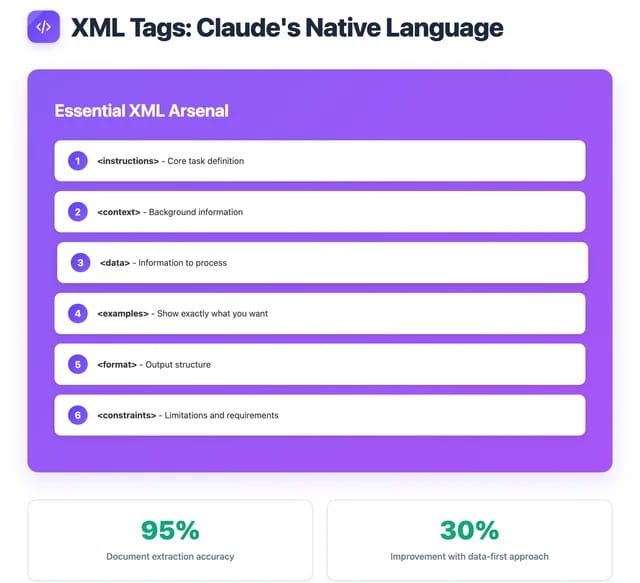
Guillaume Lethuillier decodes Anthropic's Claude as a "tour de force" by elevating 1998-era XML tags to first-class status, transforming prompts into layered language interpreters across human, programming, DNA, and AI realms—updated March 2, 2026, in his delimiters series. Claude's API docs champion XML for developer prompting, yielding "transformative" results per user reports and Anthropic's own framework, outshining ad-hoc rivals.
Key Takeaways:
💻 XML Revolution: Claude turns XML into its main delimiter system, giving developers tighter control and cleaner outputs.
🧠 Universal Principle: Delimiters mark shifts in meaning, like quotation marks or code brackets, enabling reliable communication.
🔍 Prompt Precision: XML cleanly separates instructions from data, avoiding mix-ups and supporting nested prompts.
🌌 Language Interpreter: With XML as semantic scaffolding, Claude acts more like a true interpreter across text, code, DNA, and verse.
⚠️ Andrew Ng Warns: AGI Out — Bubble Risk in AI’s Trainings

Inc./Fast Company spotlights AI pioneer Andrew Ng, who argues that human-level AGI remains “many decades” away, while the true fault line for an AI bubble lies in the capital‑intensive training layer rather than everyday applications. He says the next phase of the industry will be defined by agentic AI systems that automate multistep workflows, even as most enterprises still struggle to see clear ROI and sovereign AI strategies reshape how governments and companies build and control models.
Key Takeaways:
🧠 AGI Timeline: True human-level AGI that can perform the full range of human intellectual tasks is still many decades away, despite looser marketing definitions.
🤖 Agentic First: Agentic AI—multistep, tool-using workflows—will generate more near-term economic value than simply training ever-larger frontier models.
💸 Bubble Risk: The greatest bubble risk sits in the capital-heavy training layer, where a few players are pouring massive spend into specialized hardware.
🏛️ Sovereign Shift: Fragmenting geopolitics is driving sovereign AI strategies, while CEOs are pushed to redesign workflows and favor talent & build with AI.
🔧 Alibaba’s Tiny Qwen3.5-9B Outguns OpenAI on Laptops
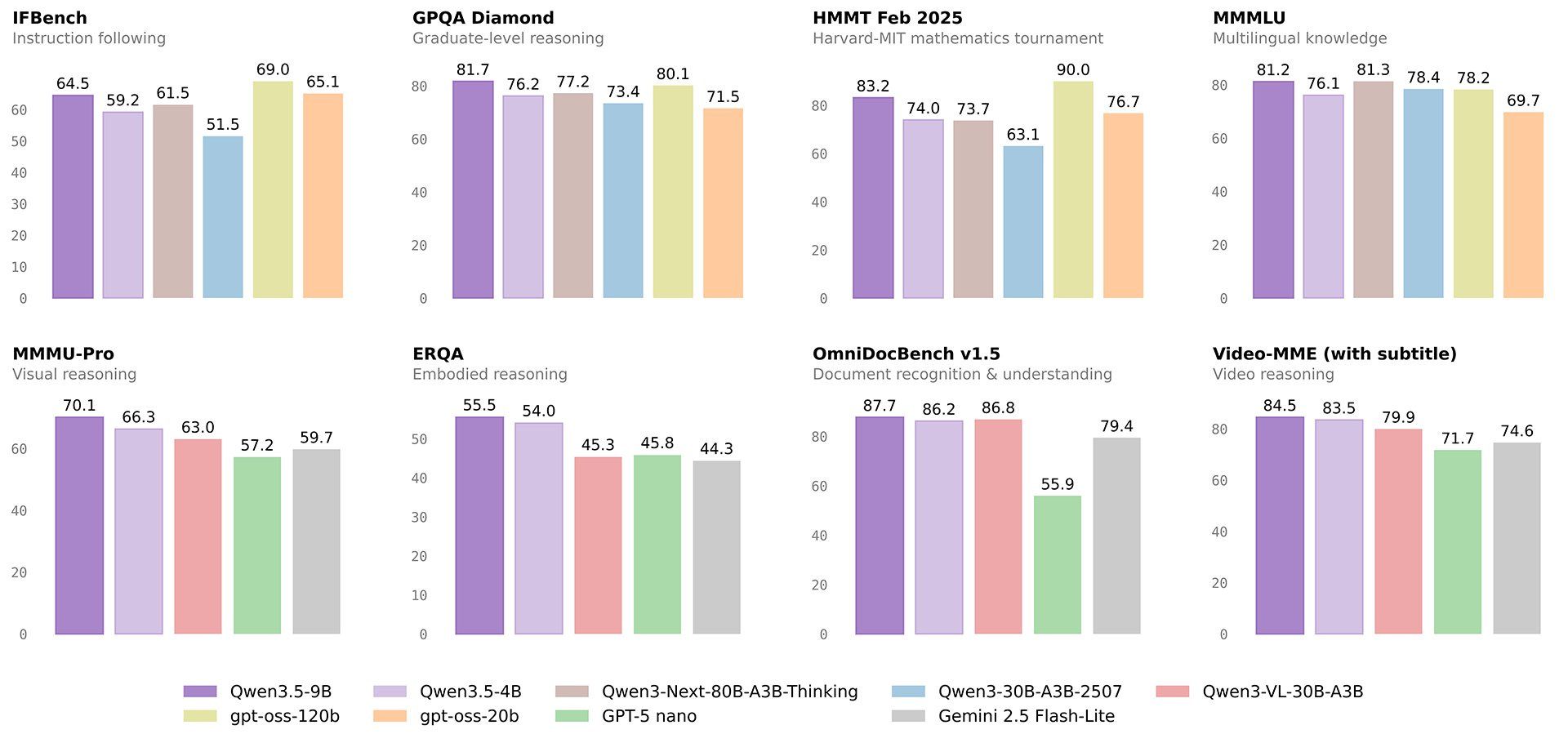
VentureBeat highlights Alibaba’s Qwen3.5 Small Model Series, where the 9B model beats OpenAI’s much larger gpt-oss-120B on key benchmarks yet still runs on standard laptops under an Apache 2.0 license. Its hybrid, multimodal design delivers “more intelligence, less compute” for edge, browser, and local-first agentic AI on everything from phones to M1 MacBook Airs.
Key Takeaways:
⚙️ Small Model, Big Upset: Qwen3.5-9B beats OpenAI’s gpt-oss-120B on major tests, even though it’s far smaller.
🧱 Hybrid & Multimodal: Its efficient hybrid design handles text, UI, images, and video with long-context reasoning.
💻 Local-First Edge: Qwen3.5 runs on phones, laptops, and browsers, enabling powerful offline AI without costly GPUs.
📜 Open Weights, Open Options: Apache 2.0 licensing lets enterprises fine-tune, self-host, and avoid vendor lock-in.
Rapid Fire Resources
 Open-source chatbotWeighs deliberate reasoning before final answers. |  Custom AI RouterChooses and orchestrates the best LLM per task. |
 Open-source automationBuilder with pluggable AI actions and integrations. |  AI Desktop agentClicks, types, operates and maps apps for you. |
📊 Take This Edition’s Poll:
 |
Why It Matters
The real edge now is turning AI into reliable infrastructure that runs fast, cheap, and under control, not just claiming AGI in a slide.
Use this week’s tools and stories to tighten your stack, not just your slides.
Until next time,
P.S. Interested in reaching our audience? You can sponsor our newsletter here.